Fire Damage Claims
Mastering Insurance Claims: From Fire Damage to Final Payout
LoadBearing Editorial · · 11 min read
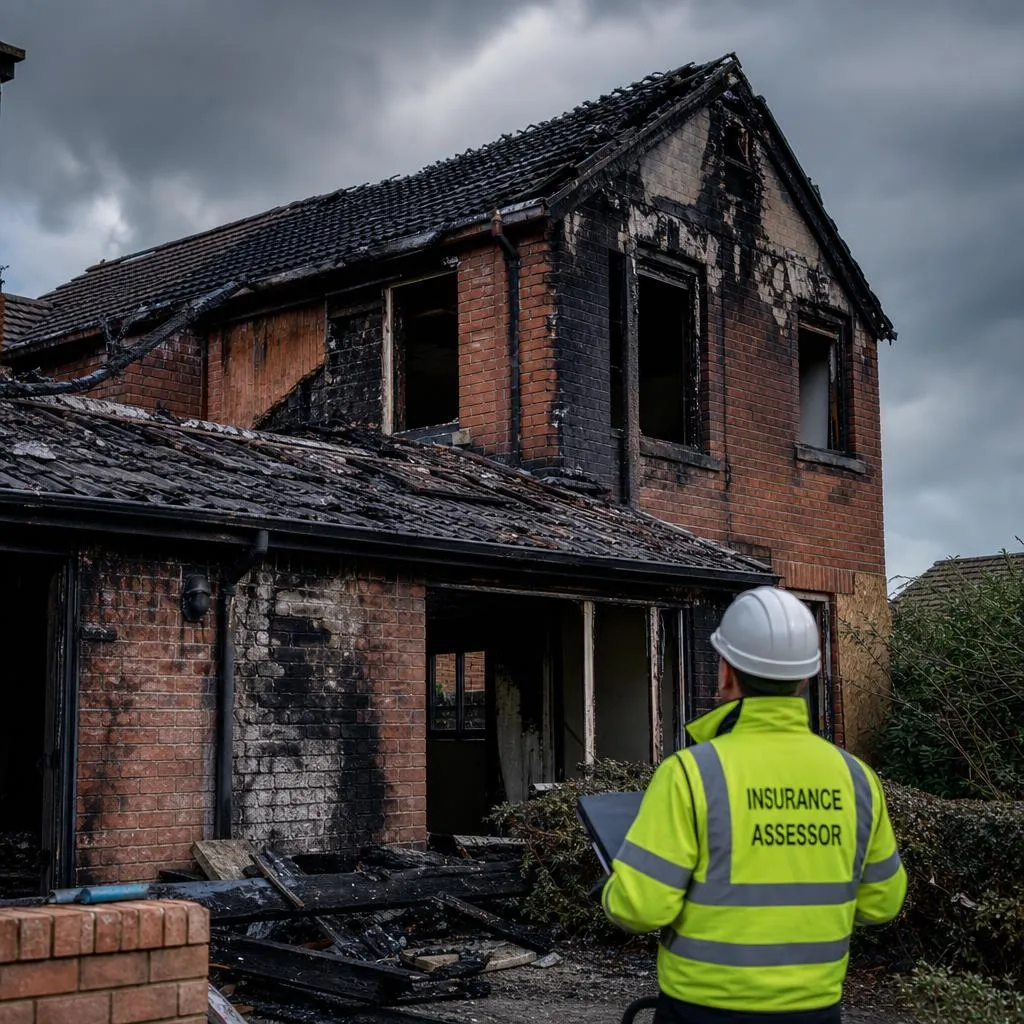
Handling insurance claims—particularly those involving fire, water, or severe structural damage—requires a level of meticulous documentation that far exceeds standard retail contracting. The adjuster is looking for reasons to deny or reduce the claim; your job is to provide undeniable proof of loss and cost.
What should be documented before fire mitigation starts?
Document every affected room, structural member, electrical run and contents area before any mitigation or demolition starts, because once material is removed the evidence is gone.
When dealing with fire damage, the initial assessment is everything. Every charred beam, smoke-damaged drywall section, and compromised electrical run must be cataloged. LoadBearing CRM allows field technicians to capture unlimited high-resolution photos and attach them directly to the client's file from their mobile device.
These photos are organized chronologically, creating an undeniable visual record of the damage before any mitigation or demolition begins. When the insurance adjuster requests documentation, you can easily provide access to these comprehensive photo galleries to justify your scope of work.
Streamlining Authorizations with Pro Docs
Before any mitigation work begins, the contractor must secure signed authorizations, emergency work orders, and Assignment of Benefits (AOB) forms. Paper forms are slow and easily damaged on messy jobsites. LoadBearing's Pro Docs feature solves this elegantly.
Contractors can upload their standardized PDF legal agreements, overlay signature blocks and date fields, and send them directly to the homeowner's smartphone. The homeowner signs digitally, and the legally binding document is permanently attached to their file. This ensures compliance is handled before a single hour of labor is expended.
How should a multi-trade fire estimate be organized?
Organize a fire estimate by room or by trade, consistently, so an adjuster can trace every line item to photos of that area.
Fire damage requires massive, multi-trade estimates. You aren't just replacing a roof; you are mitigating smoke odor, running new electrical, framing walls, and installing custom cabinetry.
Using LoadBearing's flexible estimating system, contractors can build massive proposals divided logically by trade or room. Presenting this clean, digital estimate to the adjuster shows professionalism and organization. When changes are required, you can issue formal Change Orders to keep the finances strictly tracked and approved.
Automating the Follow-Up
Adjusters are overwhelmed with files. If you do not follow up, your claim will sit at the bottom of their stack. Using LoadBearing's automated email and SMS workflows, you can set triggers to keep the lines of communication open with both the homeowner and the carrier representatives.
Restoration work is highly profitable, but only for the contractors who treat their paperwork as seriously as they treat their field work. By digitizing the entire claim lifecycle, you build a defensible, fast-moving pipeline.
An example room-by-room structure
The breakdown below is a hypothetical kitchen fire, shown only to illustrate structure. Group the estimate as Kitchen, Adjacent Dining Room, Attic, and Whole-House items. Under Kitchen: demolition of cabinets and drywall, framing repair where char depth requires it, electrical replacement for the affected circuits, new drywall, cabinets, and paint. Under Dining Room: smoke cleaning and sealing of walls and ceiling, with no replacement unless testing shows it is needed. Under Attic: insulation removal and replacement in the burned section. Under Whole-House: odor treatment and HVAC cleaning.
Each group references its own photo set. When an adjuster disputes a line, you answer with the specific photos for that room instead of resending the whole gallery.
What are the limits of a contractor's role?
A contractor documents, estimates and performs repairs; the policy and the adjuster determine coverage. Do not advise a homeowner on what their policy covers unless you are licensed to do so where you work. Assignment of Benefits forms are regulated or restricted in some states, so confirm your local rules before using one, and have your own counsel review your authorization templates.
Edge cases on fire jobs
- Code upgrades. Rebuilding may trigger current code requirements the original structure did not meet. Coverage for these depends on the policy, so list them separately.
- Contents versus structure. Contents are often handled by a different vendor or a separate claim. Keep them out of your structural estimate to avoid confusion.
- Hidden damage found during demolition. Stop, photograph, and issue a change order or supplement before closing the wall.
- Cause-and-origin holds. If an investigator has not released the scene, do not disturb it, even for documentation.
Fire jobs reward contractors who slow down at the start. An extra hour of documentation before demolition routinely saves days of negotiation at the end.
How often should you follow up with an adjuster?
Follow up on a predictable schedule, such as every few business days while a file is open, and always after a document is submitted. Each follow-up should reference something specific: a pending supplement, a requested photo set, a signed authorization. Automated reminders help you keep the schedule, but the message itself should be written for the file, not generic.
What should the homeowner hear and when?
Homeowners after a fire are dealing with displacement, contents losses and their own insurer. Tell them early what you do and what the carrier decides, give them a single contact, and send updates at each milestone: authorization signed, estimate submitted, approval received, start date set. Clear expectations prevent the daily calls that otherwise consume the office.
Filed under Insurance Claims, Jobsite Operations
Related field notes
- The End-to-End Workflow: From Lead to Final Payment in LoadBearing CRM · CRM Features
- Scaling Specialized Construction: Operations Beyond General Contracting · Construction
- Documenting Wind and Hail Claims: A Blueprint for Approvals · Insurance Claims
- Surviving Storm Work: Cash Flow and CRM Features for Roofers · Roofing
Ready to stop letting jobs fall through the cracks? Start a 14-day free trial.